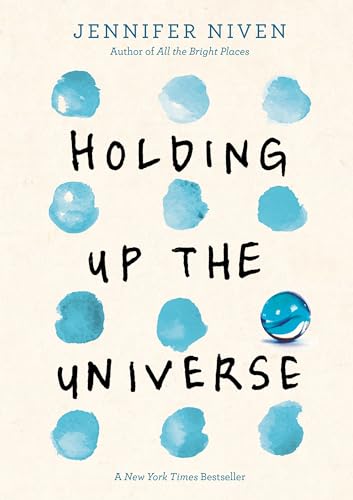
 I don’t find very many books at random anymore—I’ve become a “request and pick up” reader rather than a library browser, mostly. But…sometimes I’m short on books and that requesting does take time. And sometimes I find a gem just by picking it up. Such is how I found Holding Up the Universe by Jennifer Niven, a troubled teen story with teens with unusual troubles.
Jack has face-blindness—he can’t recognize anyone, even his mother or two brothers. He navigates through life by remembering key details (his brother is skinny with big ears, his girlfriend has a very helpful fake beauty mark), hiding his challenge from everyone. Libby went viral in an online video in the worst possible way—as a morbidly obese teen who had to be cut out of her house. Since then she’s lost weight but remains large (and feels comfortable at her current size), and is now facing a return to high school. When the two end up thrown together, they each see the other in unique ways.
This was a fascinating book. I don’t like troubled teen books as a rule, but this was not your run-of-the-mill troubles. I’m so intrigued by Jack’s face-blindness. His particular situation is extreme, but it’s a real thing that a surprising number of people have (and surprising people: Jane Goodall! Brad Pitt!) The book is in alternating POV, and I loved seeing the world through Jack’s eyes as he navigates a world that is always full of strangers.
Libby may be a contender in nine months for my favorite character of the year. She’s done a lot of hard work in the last few years, losing weight of course but also (and more to the point) work on self-image and self-confidence. Her over-eating was brought on by her mother’s death and bullying, so that’s hard issues right there. As she returns to high school, she is simultaneously totally confident in herself, and totally afraid of trying to be that self out in the world. Continue reading “Book Review: Holding Up the Universe”
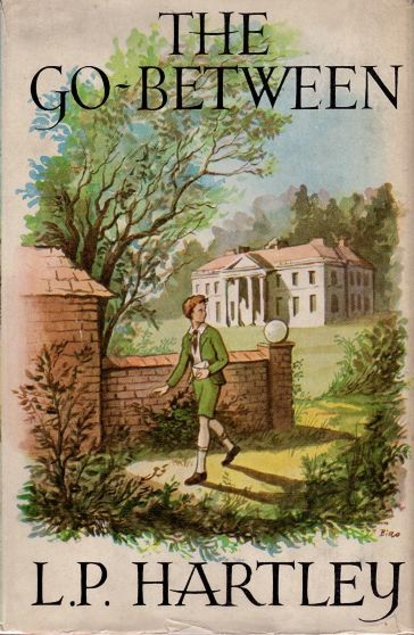 Based on anecdotal evidence, you likely have never heard of The Go-Between by L.P. Hartley, but you might know its opening line: “The past is a foreign country. They do things differently there.” I picked the book up recently because Michael Crawford (of Phantom of the Opera fame) starred in a musical play based on the book–which was why I went to England last September! (I’d have gone eventually…but that was why it happened then.) The play was wonderful, Crawford was magnificent, and the book was pretty good too.
 I’ve frequently seen Rumi quoted, and almost always liked whatever I heard. Despite that, I knew next to nothing about him! So I hunted my library collection and picked an appealing title –
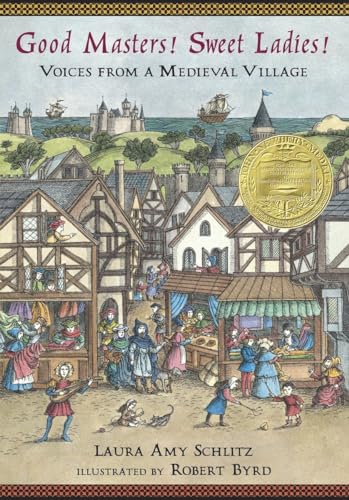 First I read Good Masters, Sweet Ladies: Voices from a Medieval Village by Laura Amy Schlitz. An unusual format, this is a collection of monologues (and two dialogues). Each speaker is a different character from the same village, each speaking about his/her life.
 Tales of the Marvelous