Blog Hop: Toxicity

book-blogger-hop-finalToday’s Book Blogger Hop question is: Have you ever read a book or books you would consider ‘toxic’ because of the effect it (they) had on you? If so, which one(s)?

Ooh, what an interesting question!  There are definitely books I’ve found disturbing.  Lolita comes to mind–it was assigned in a class (on American Literature, which I still don’t understand considering Nabokov was Russian) and to this day I’m glad that I got it at the library and didn’t spend money on it.  If you’re (fortunately) unfamiliar with the book, it centers around an adult man’s sexual obsession (and relationship) with an adolescent girl, and it would be less disturbing if Nabokov was a less talented author.  One classmate described it as like watching maggots feed–compelling and horrible both at once.

The Da Vinci Code is toxic in a different way.  It makes me angry–I have an entire rant on the subject of mixing historical fact with theory with utter fiction, sometimes all in one paragraph, without any distinguishing between them.  On the other hand, the phrase “giant albino monk” gets funnier every time I say it.  Not a funny character, but the sheer absurdity of it lightens my mood.

In general I’m disturbed by books that feature sexual violence or child abuse, although I’ve discovered I find those more disturbing in fiction than nonfiction (it’s a stylistic difference).  I can read more in analytical texts (usually taking it on from a psychological analysis) than I can in fiction, though that depends on the level of detail.  And I think we all know that I’m deeply disturbed by fiction involving abusive relationships presented as romantic!

I also have a particular tic against books that address the reader in a hostile or belittling way.  I love books that talk directly to the reader if they’re friendly, but if the narrator is nasty or insulting to the reader?  Yeah, I know not to take it personally, but I still don’t like how it feels.  Part of the appeal of books is that they aren’t judgmental or unfriendly.

Have you read books that feel toxic to you?  What characteristics would make a book toxic?
Year to Date…

I went looking for a bookish topic for this Friday’s post, and found that Top Ten Tuesday‘s last post (before a summer break) was about the best books you’ve read so far in 2017.  And I thought…I’m reading some really cool books and I haven’t reviewed them all.  So let’s do a brief look-in on some of them.

In backwards chronological order of reading, just because…

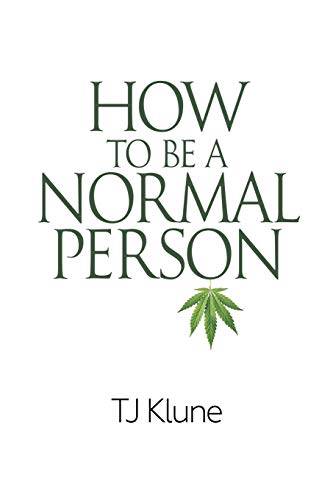
1) How to Be a Normal Person by TJ Klune – Hysterical, brilliant writing, exceptional characters, adorable romance.  Some content advisory required though, so read the full review.

2) The Star-Touched Queen by Roshani Choksi – A beautiful fantasy with Indian influences.  There’s a powerful heroine, a mysterious hero, and fascinating fantasy landscapes.  Also, gorgeous imagery!

3) Notorious RBG by Irin Carmon and Shana Knizhnik – A biography of Ruth Bader Ginsberg, it’s inspiring and enlightening.  Great writing that made even legal briefs interesting, and a powerful commentary on the struggle for gender equality.

4) Hillbilly Elegy by JD Vance – Deeply compelling and engaging, this memoir brought me into a part of American culture I don’t know at all.  I read it to try to understand certain…recent events.  Not quite as conclusive as I hoped, but fascinating.

5) We Have Always Lived in the Castle by Shirley Jackson – Masterful, creepy, terrifying.  Wonderfully done.

6) The Girl from Everywhere by Heidi Heilig – Maps to sail through time.  Need I say more?

7) Holding Up the Universe by Jennifer Niven – Still two of my favorite characters met this year, each with an unusual perspective to bring.

8) I’d Say Yes, God, If I Knew What You Wanted by Nancy Reeves – One of the best, most enlightening, spiritual books I’ve probably ever read.

9) The Sun Is Also a Star by Nicola Yoon – If a book can be real-time, this one is.  It’s a brief, compelling romance, that also provides a lot of social commentary in a natural, non-heavy-handed way.  Made me think, while having compelling characters and plot.

10) The Righteous Mind by Jonathan Haidt – This book really, really helped me understand some things about how we as a society view right and wrong, and why we keep stumbling into problems communicating.  So, so helpful, and I keep recommending it to friends.

So it appears that when looking for the best books of the year, I have managed to review many of them after all.  Kind of reassuring!  And intriguing, how many of the best have been nonfiction.  That is a new trend in my reading.  I don’t feel sure it will continue (fiction and I go way back, after all) but that seems to be where I am now.

How has your reading been so far this year?  Any trends or favorites emerging?

Book Review: How to Be a Normal Person

I picked up How to Be a Normal Person by T. J. Klune on a friend’s recommendation–and it turned out to be one of the most fun books I’ve read this year, with a serious contender for favorite romantic couple.  This is particularly remarkable considering it’s way, way far out of the usual genres I read.  For one thing it’s contemporary real world.  Also, it’s a homosexual romance involving an asexual stoner hipster.  And it was brilliant.

The story centers around Gus, who has just been marking time in the past few years since his father died.  He lives in a tiny town of 300 people, and runs his late father’s video rental store (reminder: contemporary novel).  Tuesdays are the worst days of the week–it’s 99 cent rental day and the place is packed, with at least four customers coming in.  And then Gus meets Casey, a new arrival in town, who Instagrams everything, spends most of his time stoned, and writes teen paranormal fiction.  Also, he thinks Gus is amazing, which confuses Gus not a little.  But he thinks Casey is amazing too, and decides he has to learn how to be normal for Casey.

Books are usually about the characters for me, and this one is really about the characters.  And the writing style.  Both are hilariously, hysterically funny.  Gus has an inner monologue going of freaked out confusion for much of the book, and it’s awesome.  He is wonderfully secure and insecure at the same time.  He is totally, fully himself–but loses it completely in unfamiliar or nerve-wracking situations (like, say, Casey saying hi when they meet).  He somehow manages to consciously set out to change himself, without changing even a little. Continue reading “Book Review: How to Be a Normal Person”

Blog Hop: Passion in a Sentence

book-blogger-hop-finalToday’s Book Blogger Hop question is: In one sentence, describe your passion for reading.

I read to learn–to escape–to relax–to meet people and journey to places I could never otherwise encounter–to have an adventure I know I can return home from safely.

(That was really hard and I think I cheated with the dashes. Also–your turn 🙂 )

Book Review: Anne’s House of Dreams

I’m going to be a bit timey-whimey, and after reviewing Anne of Ingleside (Book Six), I’m going to jump backwards and review Anne’s House of Dreams (Book Five), of the Anne of Green Gables series by L. M. Montgomery.  I reread them in the proper order—but I was excited about Anne of Ingleside so that review was written faster!  I had a lot of thoughts about Anne’s House of Dreams too though…and along some of the same themes, in fact.

Anne of Green Gables has grown-up by this book.  Near the beginning, Anne marries her sweetheart Gilbert, and they set off from Avonlea to their new “house of dreams” in another village on Prince Edward Island.  Changing location gives Montgomery the opportunity to introduce an entire new community of friends for Anne, including sharp-tongued Miss Cornelia, storyteller Captain Jim, and beautiful, tragic Leslie.  Although Anne is still in theory the protagonist, it’s the “supporting” characters who truly shine here.  Spoilers galore to come!

Besides being chronologically earlier, this book was also written significantly before Anne of Ingleside.  It doesn’t have the same themes of disillusionment–and yet, for a series that is generally classified as for children, it has very adult themes.  Montgomery writes with a light touch and an ultimate positivity that somehow masks how dark some of her concepts actually are, and like Anne of Ingleside, I didn’t fully appreciate it until I got older.  And now I think I appreciate the book even more because of those mature notes that have more depth than childhood idylls. Continue reading “Book Review: Anne’s House of Dreams”