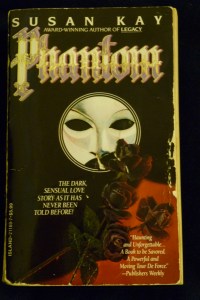
 When I went to Paris in September, I decided it was a good opportunity to finally reread Susan Kay’s Phantom
 . I read it once seven years ago, it completely blew me away, and it made such an impression that I always felt like it was too soon to reread–it was still there in my mind. And I think I was afraid that I couldn’t repeat the experience twice!
But I brought it along to Paris to read again–and it was amazing. I’m also counting it for the R. I. P. Challenge. I reviewed Susan Kay’s Phantom once already, but I think it’s worth doing it again. This review is basically going to be structured as a summary, a lot of gushing, and then circle back to Paris to talk about visiting the Opera House. You’ve been warned if you want to skip some of the gushing!
My copy of the book doesn’t have a sub-title, but I’ve also seen this called Phantom: The Story of His Life, and that’s really what it is. The story begins with the Phantom’s mother, goes on through his entire life and on past his death. Kay brilliantly grounds us in each period, telling the story in sections with different first-person narrators.
First there’s Erik’s mother, Madeleine, telling her own story and taking us through his very troubled childhood. Erik takes over the narration when he runs away from home at nine, falling in with a band of gypsies. Later we see him as a teenager in Rome; this section is told by Signor Giovanni, the master architect who saw a spark of genius in this strange masked boy, and took him under his wing–for a time. The Daroga tells us about Erik’s time in Persia, and a very sad and bloody time it is. Erik picks up the thread again when he returns to France, meets Charles Garnier, and becomes obsessed with work on the building of the new Paris Opera House–which he ultimately decides will be his escape from the world. And then Christine comes on the scene, and she and Erik tell the most familiar part of the story in alternating scenes, until the final section is narrated by–but perhaps I won’t give that away!
Kay does something truly masterful here. Every narrator has his or her own story, with their own passions and tragedies, while at the same time the book never loses its focus on Erik. It’s a brilliant balance that gives us the Phantom through so many eyes, and tells so many stories, without feeling fragmented or like we ever get lost on some side-plot. Every character is brought to life and I care deeply about all of them–even Madeleine. I hate her, so caring might not be quite the right word, but I do feel deeply about her. Although on a second read, I felt more sorry for her than I did the first time around.
The most significant character, of course, is the Phantom. As on my first read, I fluctuate between finding him scary, and wanting to hug him. He is so dark, and so unstable, and SO SAD. And brilliant–completely, unbelievably brilliant. Unlike other books I could name, Kay doesn’t pin all of Erik’s problems on the facial deformity. That’s a huge part of the book, of course, but there’s so much more. Erik is rarely shown kindness, so he doesn’t trust it when he sees it. His biggest problem is not that he’s so ugly no one could love him; it’s that he believes he’s so ugly no one could love him. It’s a fantastic, vital distinction that makes him so much more complex. And something that’s not going to be solved by a moonless night.
The scope of the book is magnificent. Without feeling long, it still feels like it crosses continents and covers decades. When an adult Erik remembers his childhood dog, I don’t feel like I just read about her a hundred pages ago–it was years in the past! Despite the huge scope, it doesn’t feel like an overview. Everything is immediate and present as it happens.
There are so many very small, very wonderfully told moments. The first to come to mind is Erik’s fifth birthday, when his mother insists that he tell her what he wants, and all he really wants is a kiss (one now, and one to save for later) and…it doesn’t end well. And I hate Madeleine. There are some nice moments of friendship with the Daroga, and later with Charles Garnier, the Opera House’s architect. There’s a very funny exchange when Erik makes a joke to Garnier about how the then-under-construction Opera House really ought to have a ghost, and perhaps they should advertise. Services of one ghost needed, tenor voice preferred.
And then near the end–just before everything goes horribly, horribly awry with Christine–Erik goes up to the roof of the Opera to pray. And he doesn’t know how, because he hasn’t since he was a little boy, and the only prayer he can come up with is Please God, let her love me, and I’ll be good forever. It just makes me want to cry and cry.
The book is so beautiful, emotional, moving–and so deeply tragic. Phantom descends to the depths and aspires to the heights of human emotion, and does it beautifully and believably. In 500-odd pages of dealing with that level of complexity, I felt like Kay hit a false note only once. There’s a near-miss, where Erik might have been able to have a better relationship with his mother and the opportunity is lost; that was the only moment that didn’t feel real. I didn’t believe Madeleine could make the leap, and it felt dragged in for tragedy’s sake. However, I make that observation mostly to say how amazing the rest of the book is–because every other moment I completely believed and was swept along with.
It may also be worth saying that I’m completely invested in my own concept of the Phantom, who he is and how his life post-Leroux (if he wasn’t dead) ought to turn out–and this isn’t that at all. But it’s so good, that doesn’t even bother me.
If I haven’t been clear enough yet, Susan Kay’s Phantom is easily among my top five favorite books I have ever read. Maybe my absolute favorite. I wouldn’t recommend reading this without either reading Leroux or knowing the Webber musical; there is an assumption of some knowledge, particularly once Christine comes in. But if you have a little grounding and you’re intrigued by the Phantom–read this. It’s mind-blowing.
Well, now that I’ve gushed plenty, let’s talk about Paris. This is also a great book to read if you’re visiting the city, particularly the Opera House. Most of it is actually not in Paris, but key sections are. When I visited the Opera House, the guide was telling us about the history and I kept thinking, “I know, that was in Susan Kay’s Phantom!” The book is set at the same time they were redesigning Paris, so it talks about the broad boulevards and the large-scale apartments, and they’re what you’re seeing as you walk around the city. It gave me a nice grounding, and of course, it populated the Opera House for me. There’s a monument to Charles Garnier near the visitors’ entrance, but Susan Kay’s Phantom brought him to life for me. And it made me happy that, even though we call it the Paris Opera House here, in Paris it seems like they mostly call it the Opera Garnier.
If you’re interested in Paris history, architecture, music, or of course the Phantom of the Opera, the Opera House is great to visit. It’s very beautiful on the inside–Garnier went way over budget! I recommend the tour–they do one in English, and you get to see the theatre, the grand staircase, and the foyer, along with a few other rooms. You don’t get to go into Box Five–but I did get the guide to point it out while we were in the theatre (Erik has good taste, it’s one of the best boxes), and I saw the door from the hall too. And there’s the famous chandelier.
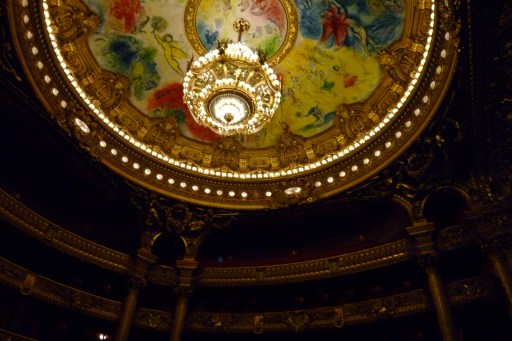
The foyer is gorgeous, all gold decorations and mirrors and yes, chandeliers. But you know my favorite thing about the foyer? It’s mostly gold paint. Garnier was struggling with his budget! Gold paint was cheaper! But I LOVE that. It’s an Opera House–everything’s illusion. Stay tuned for pictures for Saturday Snapshot!
Final word on the subject: read Susan Kay’s Phantom. It’s just the most beautiful of books, the most heart-rending of stories…and if you’re anything like me, you will be haunted by the Phantom of the Opera.
Other reviews:
The Written World
A Fair Substitute for Heaven
A Night’s Dream of Books
Anyone else?
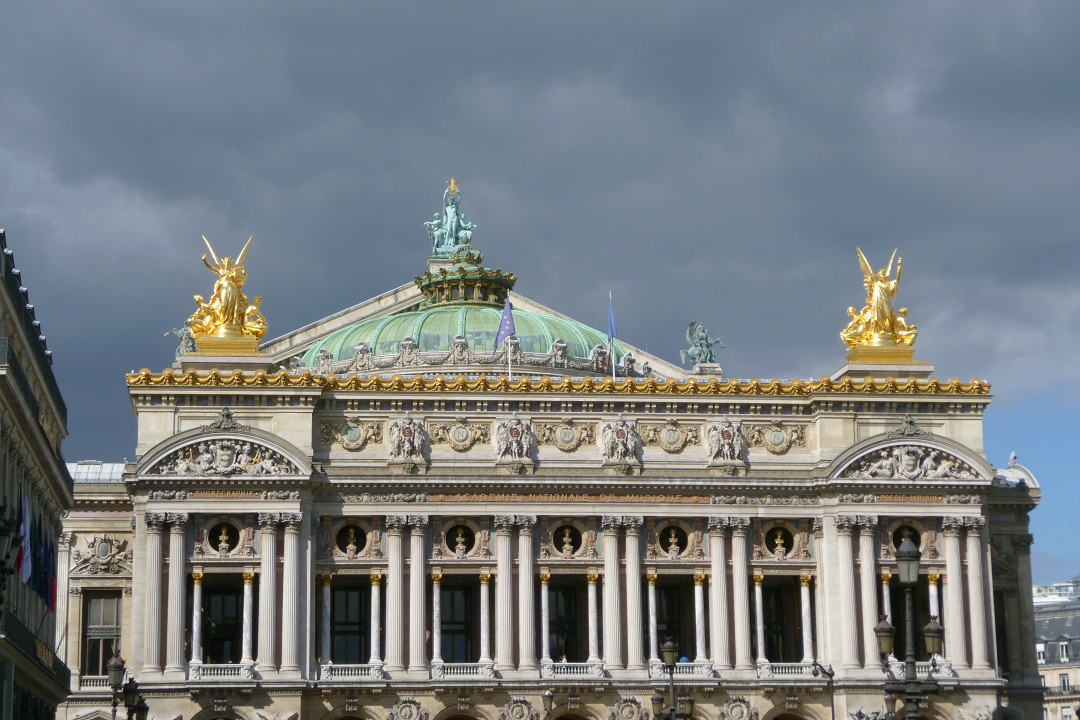 The Paris Opera House–or as the Parisians call it, the Opera Garnier. This was taken from somewhere far enough down the Avenue de l’Opera that you can see the dome. I love those gold statues. They shine so bright, even on cloudy days.
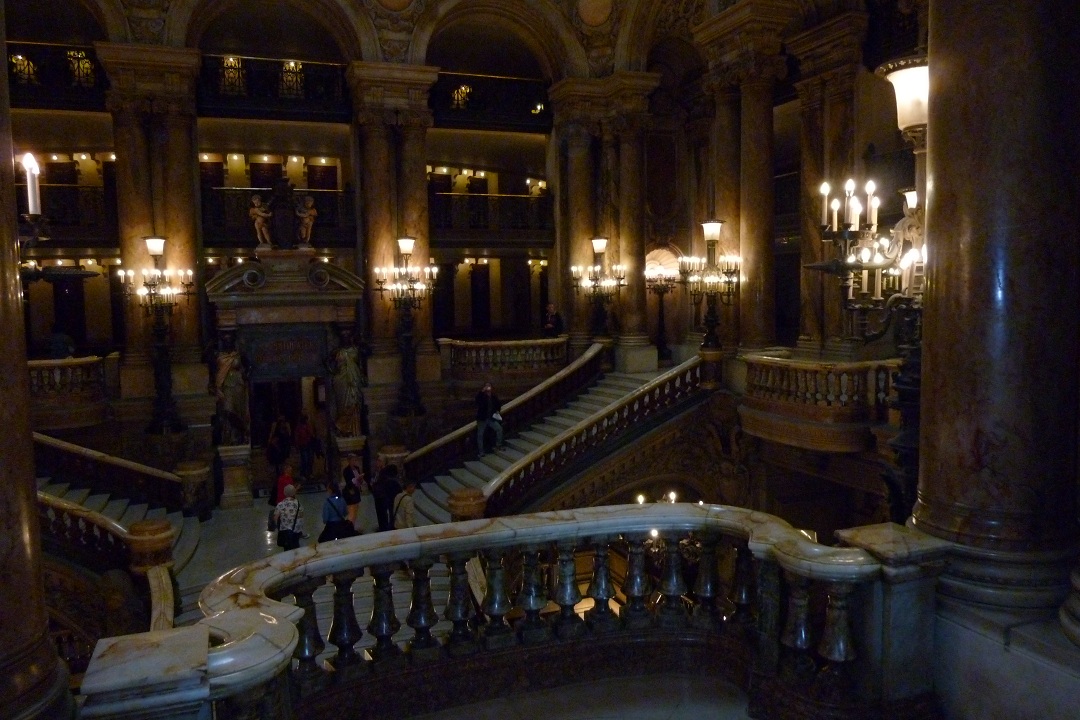 This is the famous staircase–it’s very hard to get a shot that isn’t covered in people! Not to mention one with decent lighting…
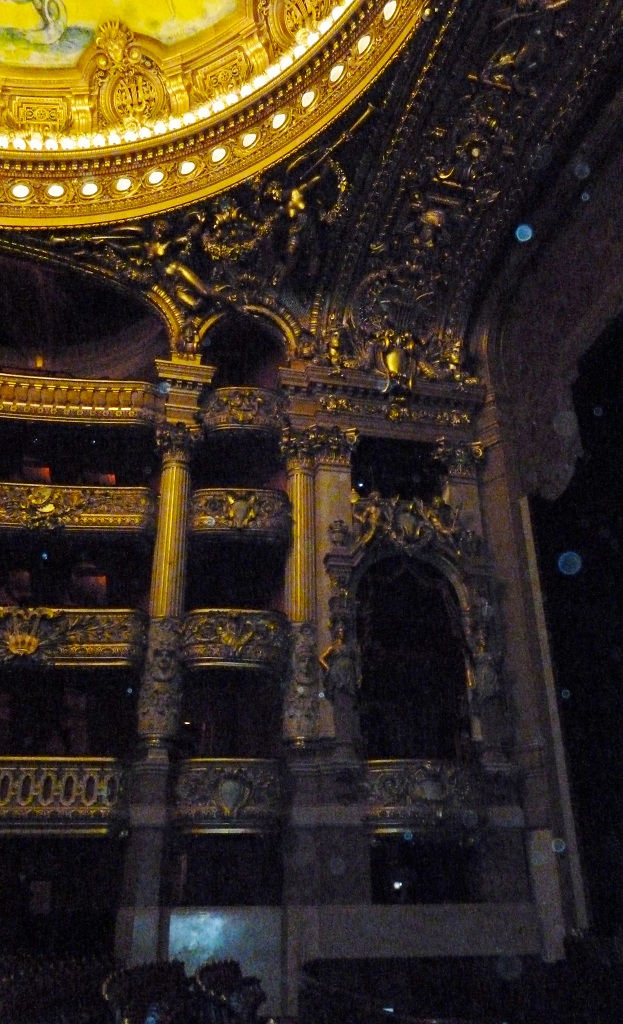 This is, I confess, what I was mostly here to see. Phantom fans–Box Five is the bottom tier, in the middle. The big box closest to the stage is the Imperial Box, and the boxes farther to the right are general boxes–and not nearly as secluded as Box Five.
 The famous chandelier! Unbroken. 🙂
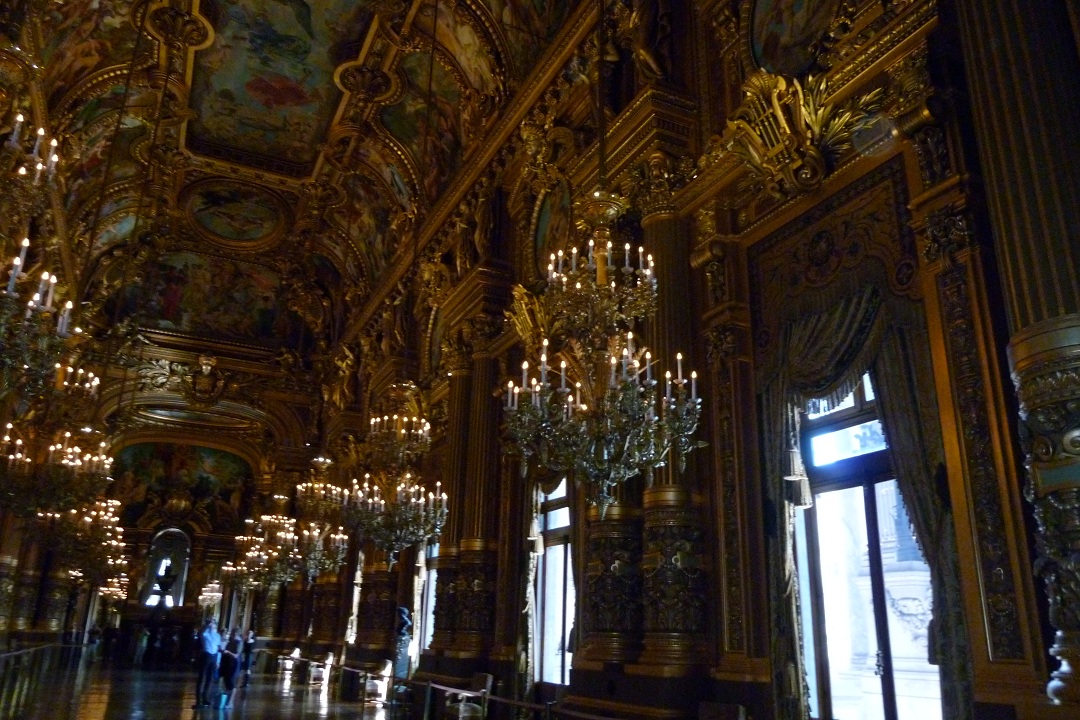 This is the grand foyer–unbelievably gorgeous. And, as fully befits an Opera House where all is illusion…it’s mostly gold paint!
 I know there wasn’t really a Phantom…but someone building this place was having fun with mirror tricks.
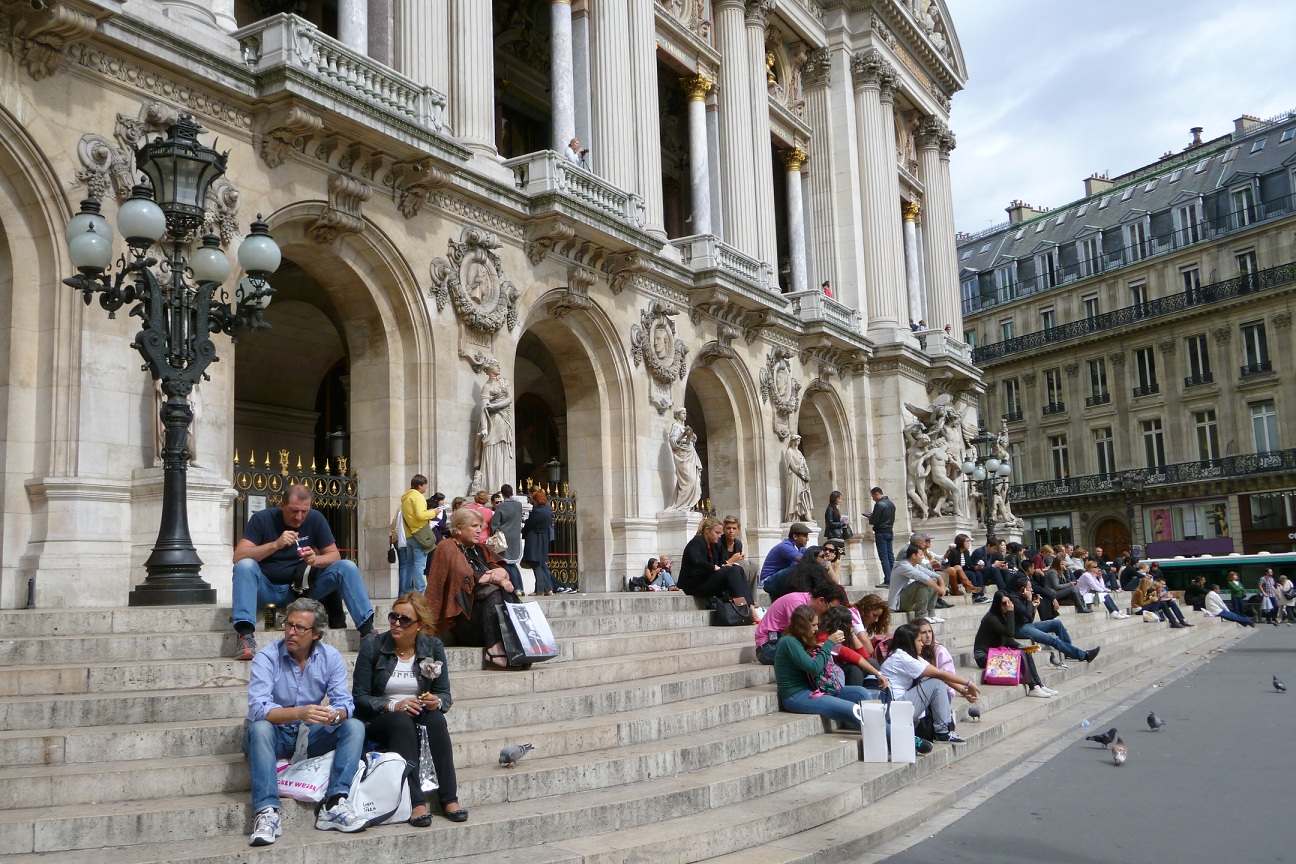 These are the front steps of the Opera House, and I feel remarkably fond of them. You see, when you’re on a literary pilgrimage and have a hotel two blocks away, it’s a wonderful discovery to find out that you can go sit on the steps of the Paris Opera House any time you like!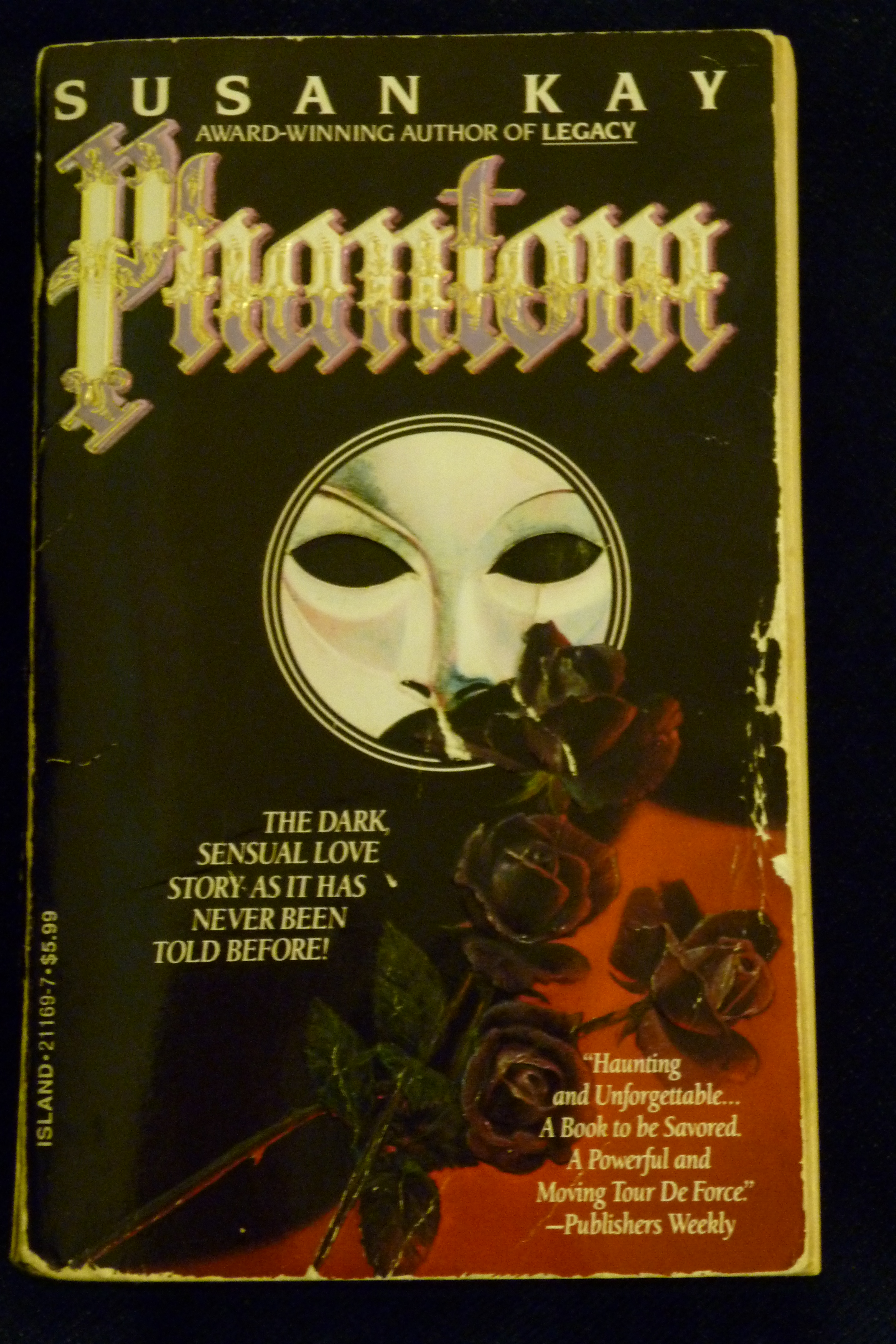


 Tales of the Marvelous