I raided the Broke and the Bookish for a topic idea again, and found this one that seemed quite intriguing: Top Ten Books That Are Totally Deceiving…
1) How I Stole Johnny Depp’s Alien Girlfriend by Gary Ghislain – I am sorry to say that my buddy Johnny was not in this for even a cameo. He only came up in references–and the book had bigger issues anyway.
2) Dating Hamlet: Ophelia’s Story by Lisa Fielder – It really is Ophelia’s version of Hamlet, but the title (and cover) make it sound much sillier than it is. It’s actually a reasonably dramatic retelling, and quite good. The same deception is being cast by the companion novel, Romeo’s Ex: Rosalind’s Story.
3) Rejection Proof by Jia Jiang – You cannot explore rejection if you take all the vulnerability out of the experience, and after doing that, you cannot claim to be an expert on the topic. Period.
4) Tarzan of the Apes by Edgar Rice Burroughs – Burroughs has his flaws, but he writes an exciting story–except for the first few chapters of Tarzan. After the apes show up, it’s all good, but before that it’s astonishingly dull. I wonder how many people have never got past chapter two? If they do, they’re set up for a new deception at the end…because Tarzan doesn’t win Jane until the end of the second book, yet many “Classic Editions” fail to note a second book even exists…
5) Starcrossed by Mark Schrieber – You cannot claim to be writing a retelling of Romeo and Juliet if there is no feud parting the lovers. And just because the heroine has a crack-pot theory about how Romeo and Juliet is her love story…no. Just no. As her boyfriend observed (really!), they’re about as much like Romeo and Juliet as they are like Hamlet.
6) Mairelon the Magician by Patricia C. Wrede – It’s probably just the particular edition I read that is deceptive. The tagline was “Could his magic be real?”and the answer, revealed by maybe chapter three, is yes, of course it is, and it’s not even very shocking. The edition offered a completely inaccurate summary of what the actual plot of the book is–and the book was wonderful!
7) The Time Keeper by Mitch Albom – An enjoyable read, but it didn’t really examine its premise. The inventor of time must help two people who have issues with time…except they don’t. One has messed-up priorities, one is depressed and suicidal. Neither is really about time.
8) Wicked by Gregory Maguire – Deceptive because I am sure loads of edition have “The inspiration for the wildly successful musical!!!” blazoned across their covers. This is true–but it gives you absolutely no concept of what you’re going to be reading, because the two bear shockingly little resemblance to each other (yes, they’re both about Glinda and the Wicked Witch at school…but that’s about the extent of the connection). See the musical. Do not (do not) read the book.
9) The Frog Princess by E. D. Baker – Similar deception to above, many editions claim this was the inspiration for Disney’s The Princess and the Frog. True, I guess…but the entire, complete sum total of similarity is…a girl kisses a frog and turns into one. That’s it. Circumstances, characters, setting–all different. Also, not a good book. Watch the movie–or read Frogged, which has just as much in common with it but is better.
10) Alcatraz vs. the Evil Librarians by Brandon Sanderson – I have rarely been so irritated by a book, and this prompted what was probably my most scathing review ever (although Underworld is a contender). There’s the title: the kid’s name is Alcatraz, the book has nothing to do with the prison. And there’s the opening scene: Alcatraz is tied to an altar of encyclopedias, about to be sacrificed by evil librarians…but he’ll get back to that later. And many chapters later, he reveals…that scene’s actually in the next book, not this one. I think that makes this a book that literally lied to me.
Have you encountered books that, in their cover or plot description or marketing campaign (or even in their narration…) are totally deceptive? I’d love to hear!

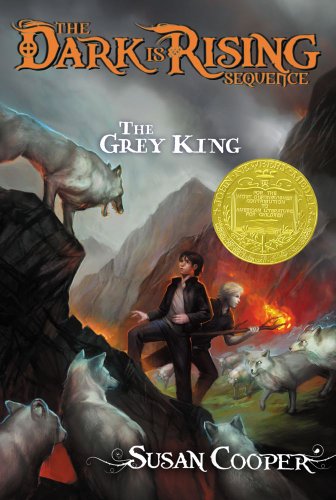 Reading down my list of Newbery Medal winners, I liked the sound of The Grey King by Susan Cooper. If I had realized it was part (Book Four) of her Dark Is Rising series, I might not have. However, by the time I realized that I had the audiobook sitting in my car and nothing else to listen to, so away we went. And it wasn’t terrible. But I wouldn’t have given it any awards either.
 I’m jumping into a new-to-me bookish meme this week,
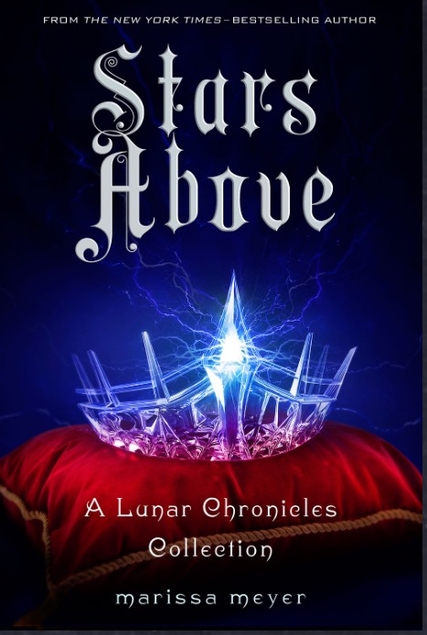 Finishing the wonderful Lunar Chronicles Quartet late last year could have been very sad…but happily, I already had the short story collection to look forward to! Stars Above by Marissa Meyer came out early in February, with nine short stories letting us revisit Meyer’s delightful characters.
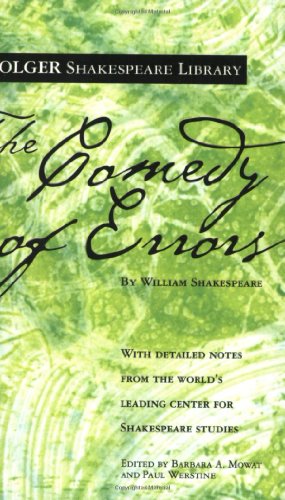 Anticipating my Shakespeare reading goals, I hauled out my Complete Works and checked off all the plays I’ve read and/or seen, to see what was missing. I found out there were four Comedies and four Tragedies I’ve yet to encounter—and then I put the Complete Works away and requested a paperback of The Comedy of Errors from the library. Because I like footnotes and books that don’t weigh far too much!
