Book Review: Emily of Deep Valley

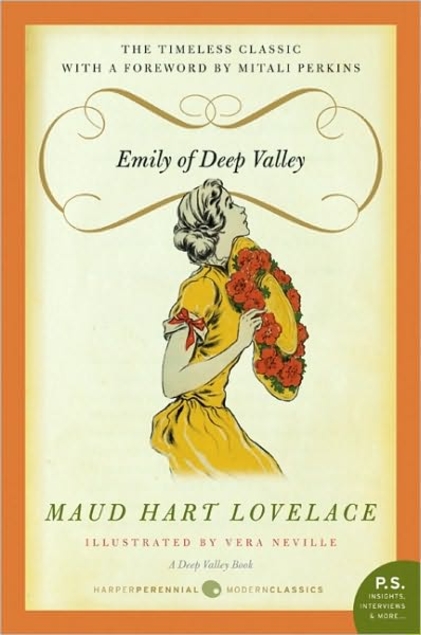
I’ve been rereading my way through the Betsy-Tacy series by Maud Hart Lovelace lately, starting with Betsy-Tacy when they’re five years old and on up to Betsy’s Wedding. I might write about the whole series some other time, but right now I want to write about one of the companion books. Ten of the books focus on Betsy (and friend Tacy), two focus on close friends of Betsy, and just one focuses on an entirely separate character who happens to live in the same small town and share a few acquaintances. And that one, oddly enough, may be my favorite.

Emily of Deep Valley starts when Emily graduates from high school (a few years behind Betsy, for those who are keeping track at home). She has always been a bit separate from her peers, an orphan living out near the slough with her grandfather. Now all her acquaintances are setting off for college while she has to remain in Deep Valley, feeling adrift with no purpose or future.

Deep Valley is the most charming of small towns. The series is set in the early 1900s, with a distinctly nostalgic and idyllic view of the time. Other books can explore class and gender and social issues of the time, but the Betsy-Tacy books are just an innocent delight. And fairly progressive in their way, as Betsy dreams of a career as a writer, and Emily feels that she needs a purpose beyond caring for her grandfather.

Of course the book ends up being about Emily finding her purpose, her confidence and a belief in herself. She’s not like Emily of New Moon (or Betsy) with her sure flame of belief in what she’s meant to do in life. This Emily has to find her way, an ordinary girl who sets out simply to help some people in her community, and to explore a few interests

That’s what I love about this book. It’s a coming of age story without trauma, a quest for meaning without traveling anywhere, a story about finding oneself without needing to find out that one is anything unusually gifted or extraordinary. And it’s just lovely.

There is a romantic element in this book, but it felt very secondary to Emily’s personal growth. Her love interest doesn’t come in until very late in the book, and her romance is an effect of her growth more than it is a cause.  Which feels perfect, although it is a quite sweet romance too.

It’s actually a very sweet series overall. But this particular installment has a little more depth to it, a little more character exploration…while being a lovely delight of a book too.

Author’s Site: http://www.maudhartlovelace.org/

Other reviews:
Live, Learn, Love
The Captive Reader
Forever Young Adult
Anyone else?

Buy it here: Emily of Deep Valley


Book Review: Daring Greatly by Brené Brown

It’s rare for me to read a book that makes me want to rush out and tell everyone I know to read it—and even rarer with nonfiction. But that happened with Daring Greatly by Brené Brown.

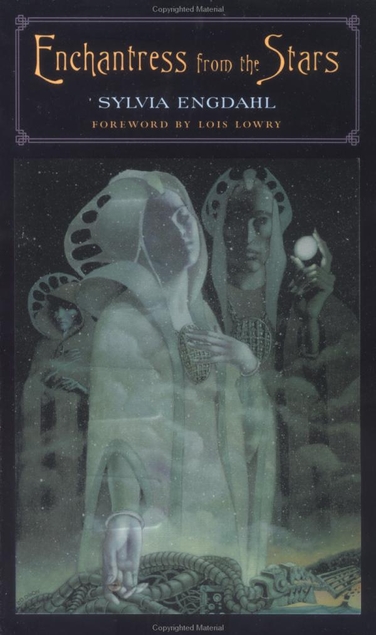
How I came to this book is a story in itself. You may have heard of Brené Brown, and if you have, it’s probably because she has a wildly successful TED talk on vulnerability, with a follow-up talk on shame. Her first one is, I believe, in the top ten most popular talks on TED (which is saying a lot) with over 22 million views. I watched the talk (for the first time) years ago, and vaguely meant to check out her books some time.

And then my book club chose to read a book on rejection: Rejection Proof: How I Beat Fear and Became Invincible Through 100 Days of Rejection. Suffice to say, the author became a supposed “rejection expert” through a series of self-devised experiments setting himself up for rejection. Except. All of these experiments involved no investment, had nothing at stake, did not involve anyone he cared about, and didn’t even put any of his identity on the line. In other words, he managed to take all the vulnerability out of rejection, which seems to rather defeat the point. I got Rejection Proof from the library and did not choose to buy it. But I went out and bought Daring Greatly.

To put it briefly, everyone experiences vulnerability, no one likes it, and yet it’s a prerequisite for connection and whole-hearted living. Brené explores what vulnerability is, how it plays into our relationships, and all the ways we try to avoid vulnerability—and why that doesn’t work. She also discusses shame and worthiness, and how essential it is to believe that we are worthy.

I’ve found that I like philosophical books from type-A perfectionist women who do too much (and are now trying to learn something different). I also appreciate books from people like Thich Nhat Hanh, but the fact is—he’s a monk living in a prayer community. Brené Brown, on the other hand, is coming from where I am.

My favorite section (also one of the longest) was on Vulnerability Armor. One of the major ones? Perfectionism. If we’re perfect enough, it’s supposed to protect us from vulnerability and make us worthy. That doesn’t actually work. But do you know how many years I never missed a scheduled blog post? (Three posts a week, for over four years.)

Another major armor is Numbing. My first thought was that this would be less relevant to me—I don’t drink or smoke or do drugs. But the biggest form of numbing? Busyness. Staying so busy we never have time to stop and think about our lives. That was the point when I decided that this book could be helpful to just about everyone I knew. I don’t mean that everyone I know is desperately avoiding vulnerability—but most people I know are too busy (and me too—again, three posts a week for four years…)

And I think the real point here is that these topics are universal. They relate, more or less and in different ways, to everyone.

So—I’ve been telling people in person and now I’m telling you too. Go read Daring Greatly. Or at the least, go watch Brené Brown’s TED talk. And if it speaks to you at all, then read Daring Greatly.

And if you know me in person, well, I do have a copy…but I’m a little reluctant to loan it out. Partially because it’s one I’d kind of rather keep around. But since we’re talking about vulnerability, I’ll go ahead and admit this—that I’m a little worried about how vulnerable it would make me to let someone see which parts of the book I highlighted!

Author’s Site: http://brenebrown.com/

Other reviews:
The Pioneer Woman
Pop and Banter
Tell Me About It, Sister
Anyone else?

Buy it here (seriously): Daring Greatly

Blog Hop: Friendly Characters and Character Friends

book blogger hopThis week’s Book Blogger Hop question: Which character in a book do you most see yourself as? If none, who would you think would be your best friend in real life?

I’ve always felt some commonality with Emily of New Moon, with her love of books and dreams of writing. And the more I read by, and about, L. M. Montgomery, the more I think I’d love to be friends with her. She’d be my first stop if I had a TARDIS—Cavendish, Prince Edward Island, June of 1908 (I’ve thought about this…)

I’d also love to be friends with September from the Fairyland series, so brave and loyal. I like reading about Jacky Faber, but I think she’d drive me up the wall if I actually knew her (as she says, she is so very hard on her friends), and I’d really rather be friends with her BFF, Amy. I’d also quite like to make friends with the kindly old gentleman of The Little White Bird, which is just another way of saying I’d like to be friends with J. M. Barrie. And I’m very fond of Menolly of the Harper Hall Trilogy and her fire lizards, and Arrietty of the Borrowers books, and oh, so many, many characters! Characters are largely why I read. 🙂

Classic Review: Enchantress from the Stars

Since I’m branching out from my usual fantasy into science fiction for NaNoWriMo this year, it seems appropriate to revisit one of my favorite books that exist at the perfect intersection between the two genres…

*******

Science Fiction and Fantasy get lumped together all the time, in discussions, in “Best of” lists, in the bookstore.  But you rarely see them together in a single novel.  Enchantress from the Stars by Sylvia Engdahl is a brilliantly-devised story that could be in Earth’s distant past–or even more distant future.

The story is told by Elana, who belongs to a society far advanced beyond present-day Earth.  She is part of a Federation of many planets, joined together in peaceful cooperation.  They study less advanced worlds, but have a strict non-interference policy, believing that it’s best for cultures to develop without knowing about more advanced races.

(For the Star Trek fans–I know, I know.  All I can tell you is that this was written in 1971, but feels less like Star Trek when you’re actually reading it.)

Elana is training to be one of the scientists who studies Youngling worlds when she stows away on a mission to Andrecia.  Andrecia’s native people are at roughly a Middle Ages level of development.  Their future is threatened by colonists from another world–the Imperials have developed space travel, but have not yet achieved the level of Elana’s people, either technologically or culturally.  The Federation team’s mission is to induce the Imperials to leave, without harming either race’s culture.

Elana ends up taking on the role of Enchantress, to relate to the Andrecians in a way they can comprehend–she especially connects with one, Georyn.  She teaches him magic spells (combinations of technology and telekinesis), so that he can go fight the dragon (the Imperials’ digging machine).  The hope is that if an Andrecian uses powers the Imperials can’t understand, they’ll be convinced to give up their colony.

The brilliance of the story is that it’s told from three very different points of view–Elana, from her advanced, enlightened perspective; Georyn, who tells a Brothers Grimm-style story about a beautiful Enchantress, a dragon served by terrifying demons, and magical spells; and Jarel, an Imperial who questions what his government is doing but doesn’t know how to act–and is probably the closest to all of us who are reading.

The three perspectives are intertwined and so different, yet work so well together.  It’s emphasized, in Elana’s sections, that Georyn’s perspective on events isn’t wrong either–he simply has a different understanding, a different way of viewing what’s happening.  In some ways, he proves to be the most intelligent and the most insightful of any of the characters.

Elana is very interesting too, because we see her as the uncertain, often naive girl she is on the mission; as the strong and wise enchantress Georyn sees her as; and as the more mature voice telling the story after it’s all over.  Her character growth, throughout the story and from the after-perspective, is very excellently done.

This is a good adventure with compelling characters, and it’s ultimately a very hopeful story.  Engdahl is careful to place Andrecia, Elana’s home world, and the Imperials’ home planet all in the position of third from their stars.  It notes in the introduction that any of them could be Earth–this could be a story about our past, or a story about our future.  Ultimately, I don’t think it matters.  We’re all of them.  The hopeful part is that the book makes it clear that Georyn’s people, and Jarel’s, and us, can all learn and grow and eventually reach the wisdom of Elana’s people.

In that way I guess it is like Star Trek, as a vision of a hopeful future.  But if you want to take this as science fiction, as fantasy, as philosophy, or even as something with some of the same elements as Star Trek, it’s worth reading–it’s a wonderful book.

Author’s Site: http://www.sylviaengdahl.com/index.htm

Other reviews:
Book Snatch
Jenna St. Hilaire
Yours?  Let me know!

Blog Hop: Reading Daily

book blogger hopThis week’s Book Blogger Hop question: Do you read every day? If so, do you have a “page goal?”

I absolutely read every day. I doubt there’s been a day in the last…10 years?…when I haven’t read for at least a few minutes. Honestly, I don’t know what people do with themselves if they don’t read (although I say that as someone who is perpetually too busy!) I read every morning before I get up—and every evening before I go to sleep—and generally for some time in between, like waiting in line, during breakfast, break time at work…

I don’t set any page goals (that would make it like work), although I do get a bit bothered if I notice I didn’t progress hardly at all in a day, and feel especially satisfied if I charged through a big chunk of reading.